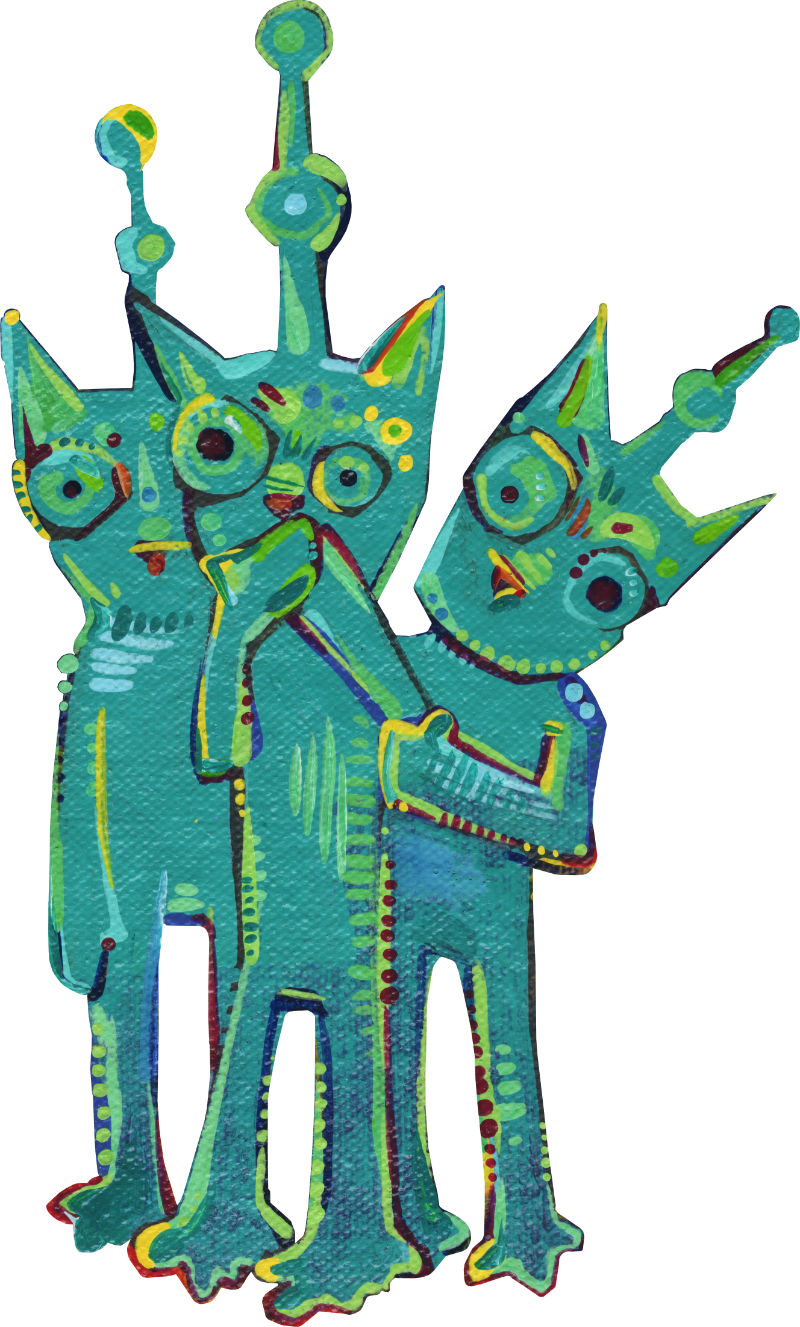
Click on images to enlarge and to learn more about what it means to be American.
|
September 2008 at the Interstate Firehouse Cultural Center, Portland, Oregon. In May and June 2009 the show will tour |
|||
Every year, as soon as the turkey-shaped stickies appeared in the windows, I would put on my war paint. I knew that, soon enough, they'd be telling me that the many-buckled men with the funny collars were my forefathers. And, every year, I would rebel before the pilgrims had even survived that first terrible winter. After all, my mother's family was still in France and my father's had emigrated from Latvia just a few generations ago: those corn-stealing religious refugees had nothing to do with me. The fact is that I didn't actually make the connection until just a couple of years ago. Maybe I didn't listen well enough in school or maybe they didn't reach out to kids like me, but it wasn't until I was an adult that I realized that John Alden and his Priscilla are my ancestors. Miles Standish and the whole gang belong to my kind: they were the first wave of immigrants. I may or may not share their blood, but, with two passports and a childhood split between the United States and France, I do understand something of the choice they made to be here instead of there. I created Apple Pie as a way of learning more about the "being American" and the "choosing to be." I had to see if other first and second generation Americans were willing to give our country's icons a facelift--to assimilate the United States as it was assimilating them. I found a few, and then I remembered that, alone, we couldn't fully represent our nation, that some people's ancestors hadn't chosen to come here. I asked an African American woman to share her story in this context and invited a Native American woman to tell of her American experience. |
|||
|
|||
Copyright 2008, Gwenn Seemel. |
|||