Blog / 2008 / The Difference between Propaganda and Art
July 7, 2008
I’m certain that the only definition of art is that it must cause change. But, if that’s the case, then doesn’t advertising qualify as art? After all, ads do cause some fairly important changes—in our wallets if nowhere else.
The difference, to my mind, lies in intent. Though an art object may be for sale, its sole purpose isn’t usually to sell the viewer something. To put it another way:
Art causes change in viewers by inspiring them to think, while the anti-revolution of ads carefully avoids inspiring thought.
And that understanding of advertising includes propaganda, an integral part of the political promotional machine.
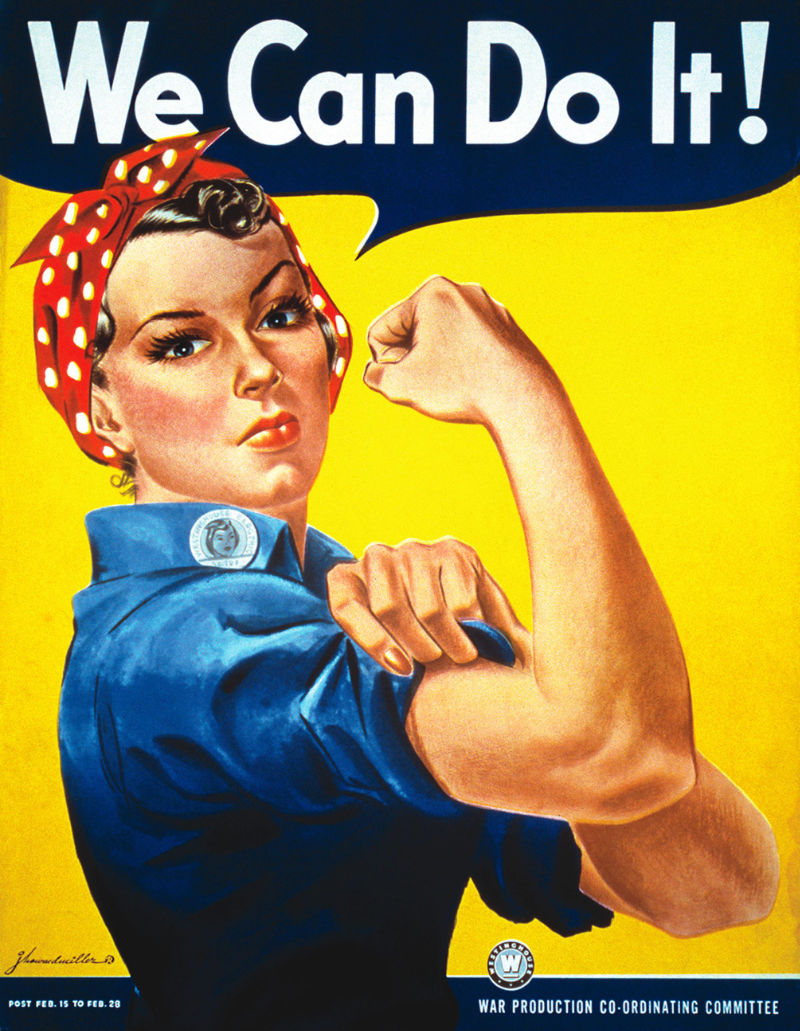
This World War II poster wasn’t created to provide women with a positive image of having a job. Well before the War, many women were working outside of the home. The need for a double income was already a fact of American life in the late 19th century.
Rosie was about making factory work more acceptable to homemakers and women who would otherwise be in clerical positions. She wasn’t asking women to rethink their place in society: that’s a modern interpretation of this image. In 1942, Rosie just wanted women to participate in the less glamorous aspects of war production.
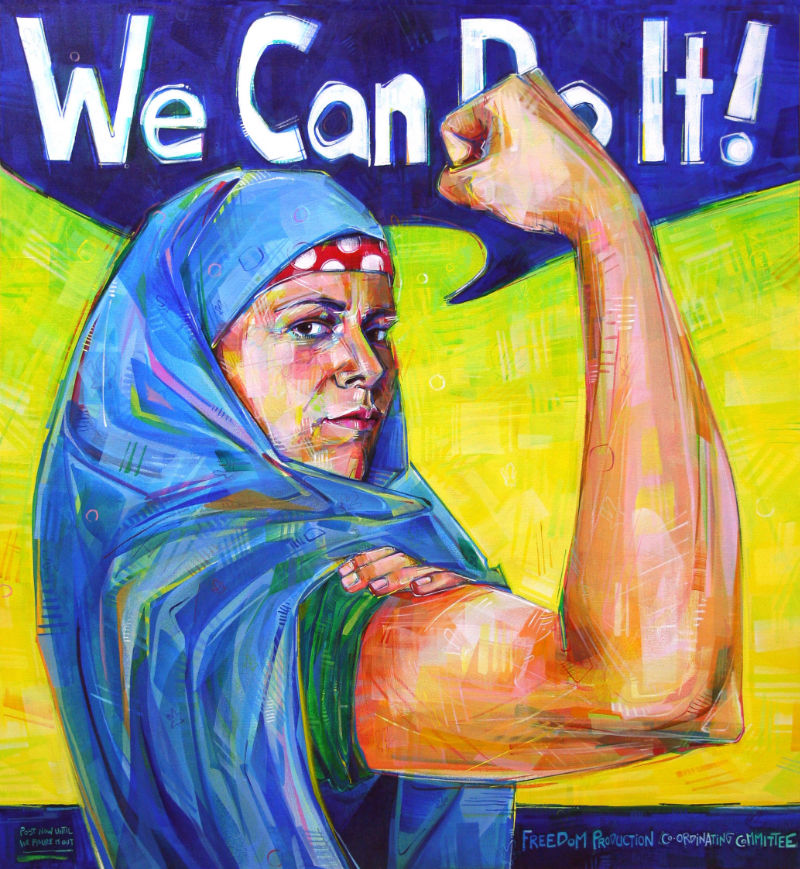
Raha the Riveter (German-Iranian-American, Kristina)
2008
acrylic on canvas
41 x 38 inches
(This painting is from a series about what it means to be American.)
Raha has a good deal more on her plate than Rosie ever did. She forgoes the original meaning and embraces the modern understanding of Rosie while also taking it a step further, from female identity to national identity.
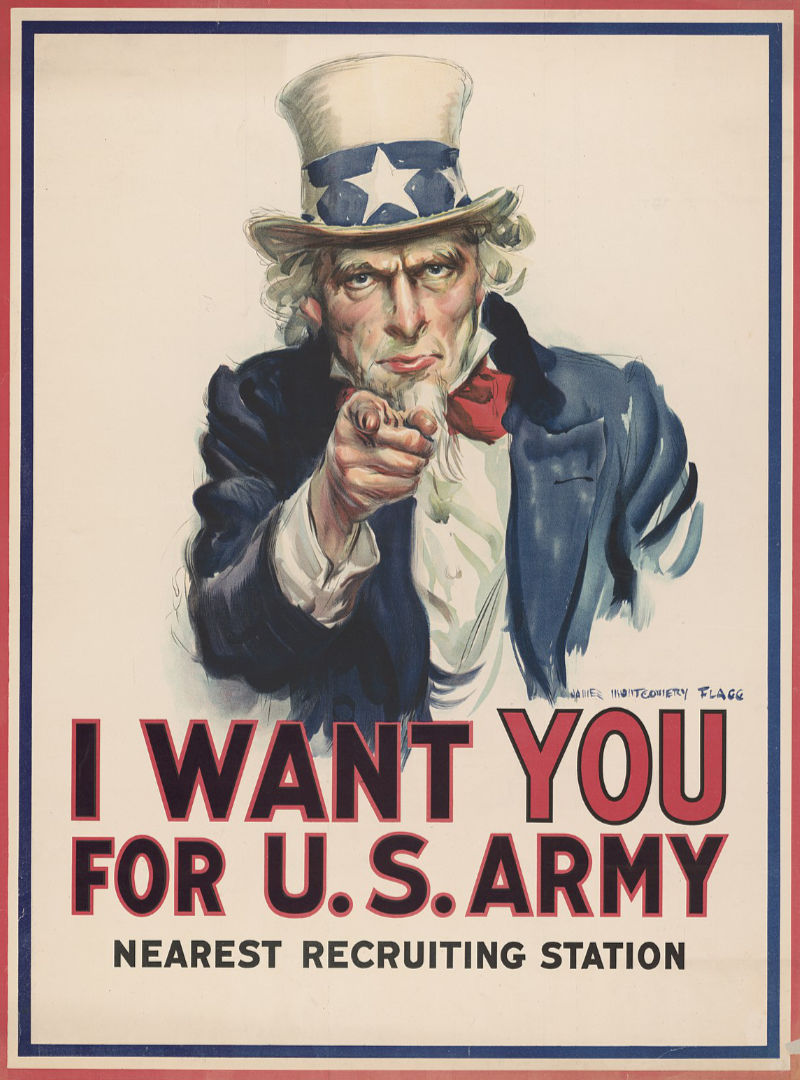
In this image, yesterday’s message of recruitment has lost out to this old white man’s imposing and memorable finger and expression. This Uncle Sam now represents how we see our government, like a demanding old codger of Western European descent who wants a cut of our earnings every April. Like a parental figure of sorts? Definitely keeping an eye on us.
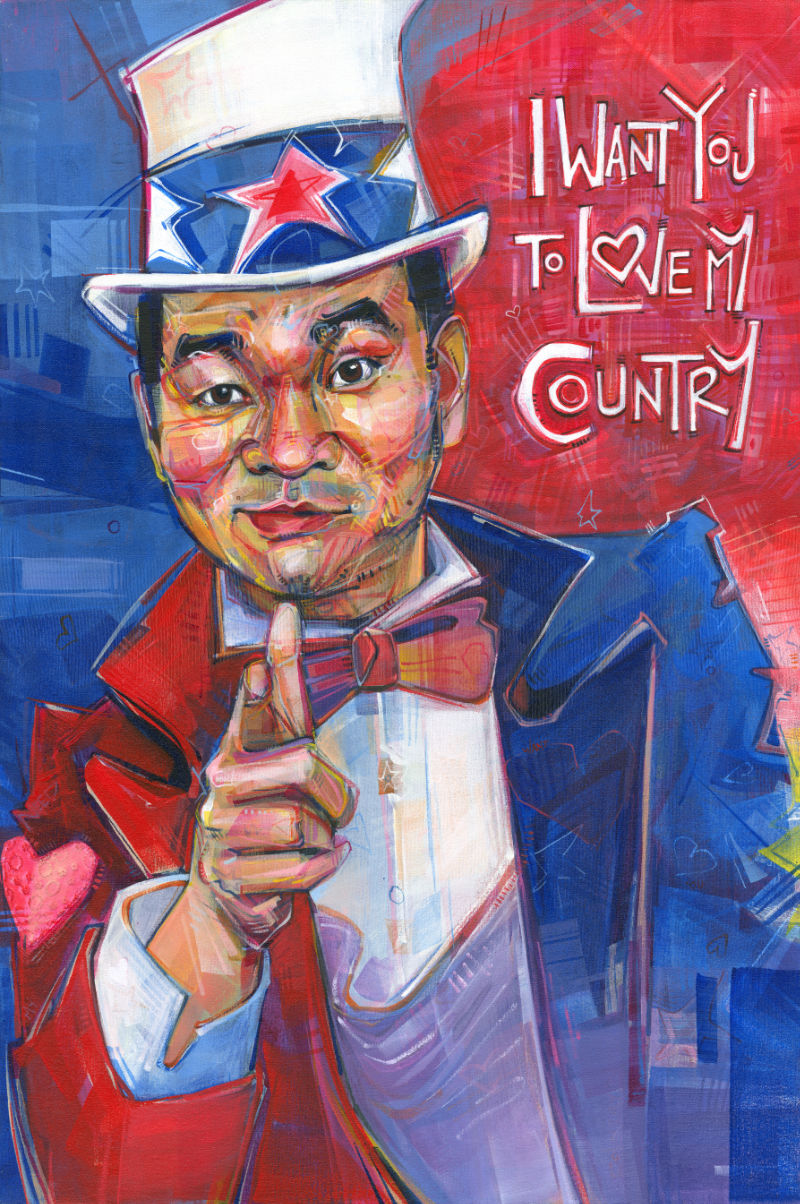
Chú Xam (Vietnamese-American, Nam)
2008
acrylic on canvas and eyelet
36 x 24 inches
(This painting is from a series about what it means to be American.)
This painting hijacks the attributes of Uncle Sam along with his name—Chú Xam means Uncle Sam in Vietnamese—without taking up his stated request for your life or his implied one for your money. Though the text in the resulting image is an order of sorts, this version of Uncle Sam isn’t telling you what to do so much as flirting with you.
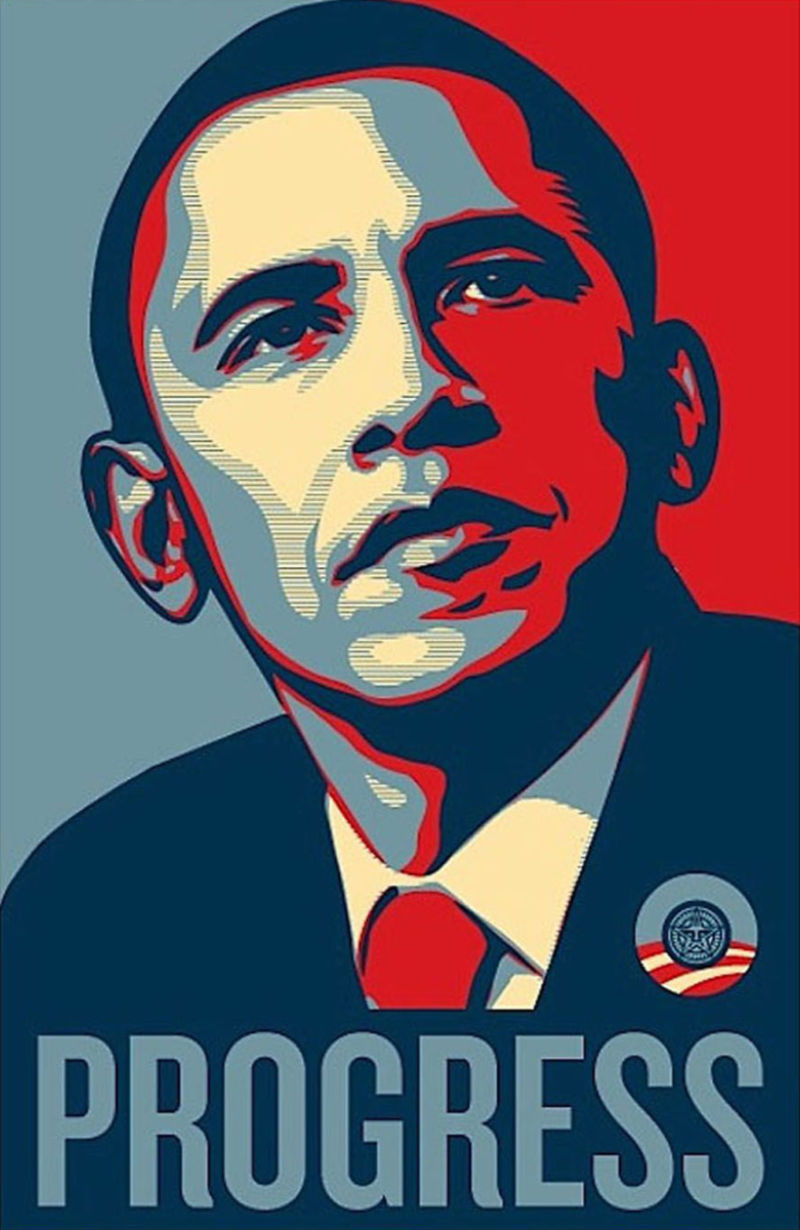
These days, propaganda posters in the US are focused around the promotion of a real person, Barack Obama. Without getting into the politics of this year’s Presidential race, I would like to note that these images have seared the likeness of the candidate juxtaposed with words like “hope” and “change” into our secular souls with little attempt to engage us as thinking beings.
The proliferation of these images fascinates me. I wonder whether or not future generations will even remember our Obam-olatry. (I suppose that depends, in part, on the outcome of the election.) And, if they do, I can’t wait to see how they will elevate our hypnotic brain trash to the level art.
UPDATE
February 27, 2025
There are a lot of presidential portraits featured on my blog. I use Obama’s and Bush II’s official paintings to explain how traditional art has the same appeal as a cover song, and I talk a lot about one of my portraits of 45—this one—because it ended up in Newsweek. In this post, that infamous portrait of 45 helps me to dig further into the difference between art and propaganda.
Maybe this post made you think of something you want to tell me? Or perhaps you have a question about my art? I’d love to hear from you!
To receive an email every time I publish a new article or video, sign up for my special mailing list.
If you enjoyed this post, Ko-fi allows you to donate. Every dollar you give is worth a bajillion to me!