Blog / 2010 / My Brushes
January 4, 2010
I’ve always been particular about the tools I use in my work, but, more than any other brush, the Da Vinci Cosmotop Spin Flat Wash Series 5080 size 60 brushes have changed the look of my paintings. Finding these brushes was a revelation: they forced me to re-evaluate the way that I put paint on canvas.
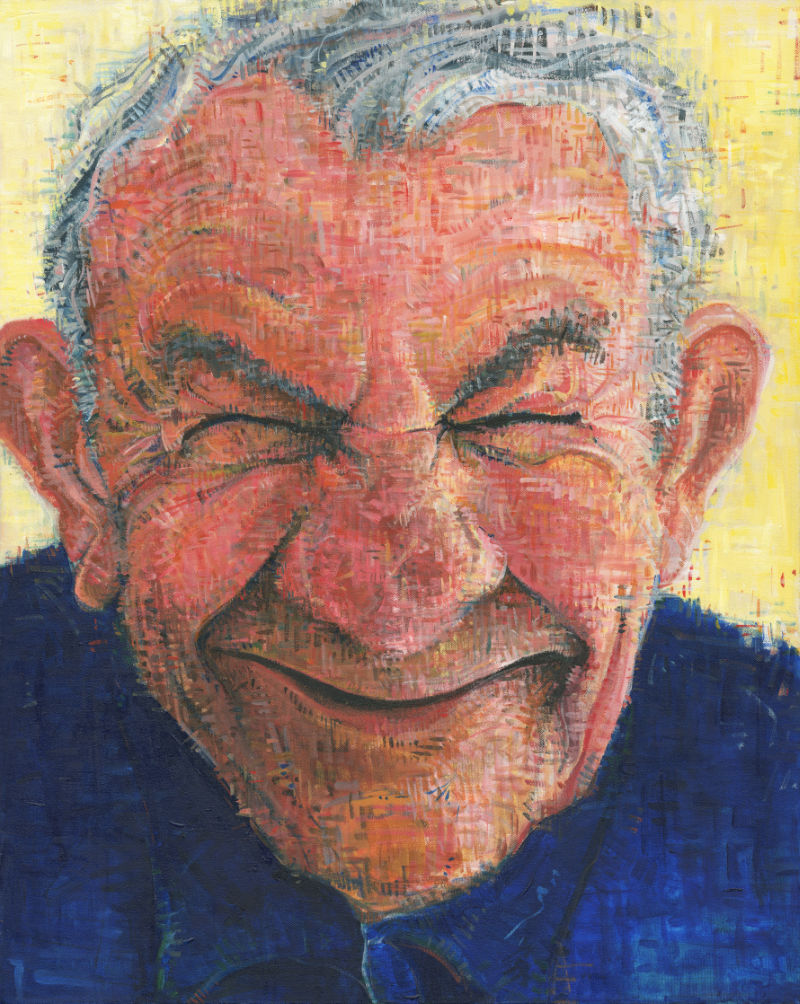
Patern Kervinio
2001
acrylic on canvas
30 x 24 inches

Winsor & Newton Galeria round brush. Long before I was a Da Vinci Flat Wash enthusiast, I was using this Winsor & Newton brush. It’s a very average kind of brush, nothing special about its shape or size. For years it was the mainstay of my painting tools and I still use it today.
In 2001, I was making paintings like the one above depicting my grandfather. I would start a portrait by laying down structural lines and crosshatching with rounds like the one shown here—sometimes bigger ones too. Eventually, I would use 00 size round brushes to complete the painting, and their small brushstrokes are obvious and even overwhelming in this painting. My brush collection was limited, and it’s reflected in the rather uniform finish of the work I was making at that time.
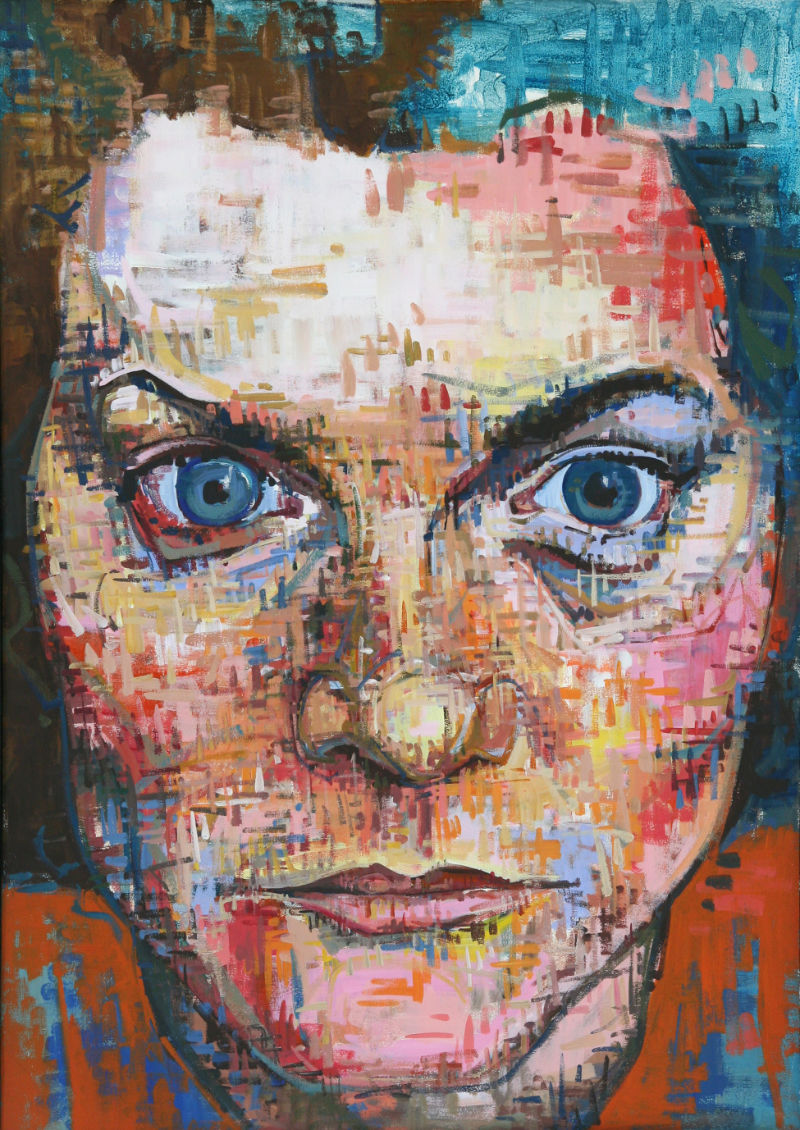
Andrea Wallace
2003
acrylic on canvas
48 x 34 inches
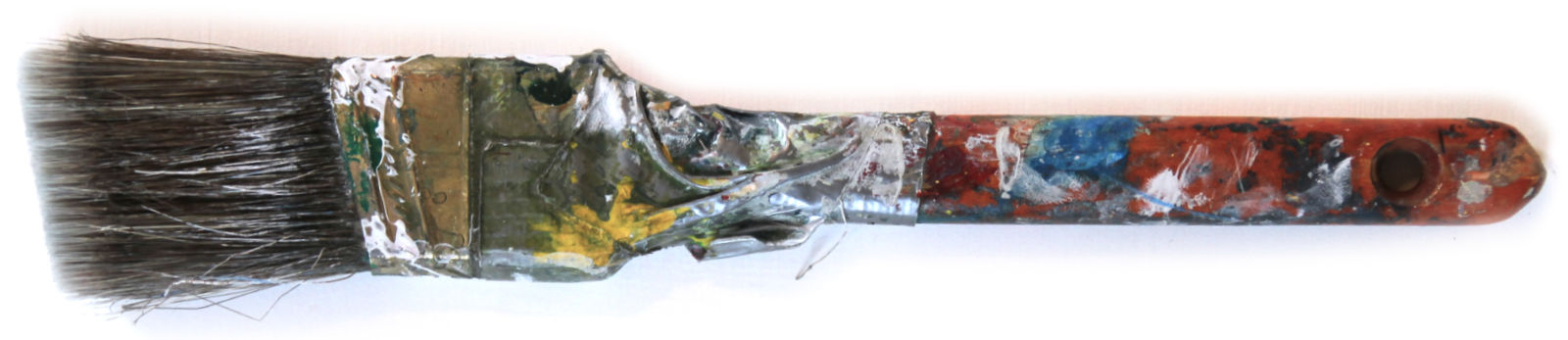
House painting brush. Besides the Winsor & Newton rounds, in 2003 the only other brush in my toolbox was this large house painting one. A hardware store find, I was lured in by the affordable price and the rough look that it gave my marks. At some point though, I came to realize that this brush was costing me a lot of money. It was sucking up a lot more paint than it could ever put down on the canvas and, unlike house paint, the fine acrylics I was using were spendy!
All that said, seven years ago, this brush made a lot of sense for me. It helped me to open up areas of my paintings, giving my viewers’ eyes a rest from the minute crosshatching. I used it to put down the first washes of color, and, by the time I painted Andrea’s portrait, I had started to allow some of this brush’s work to show through.
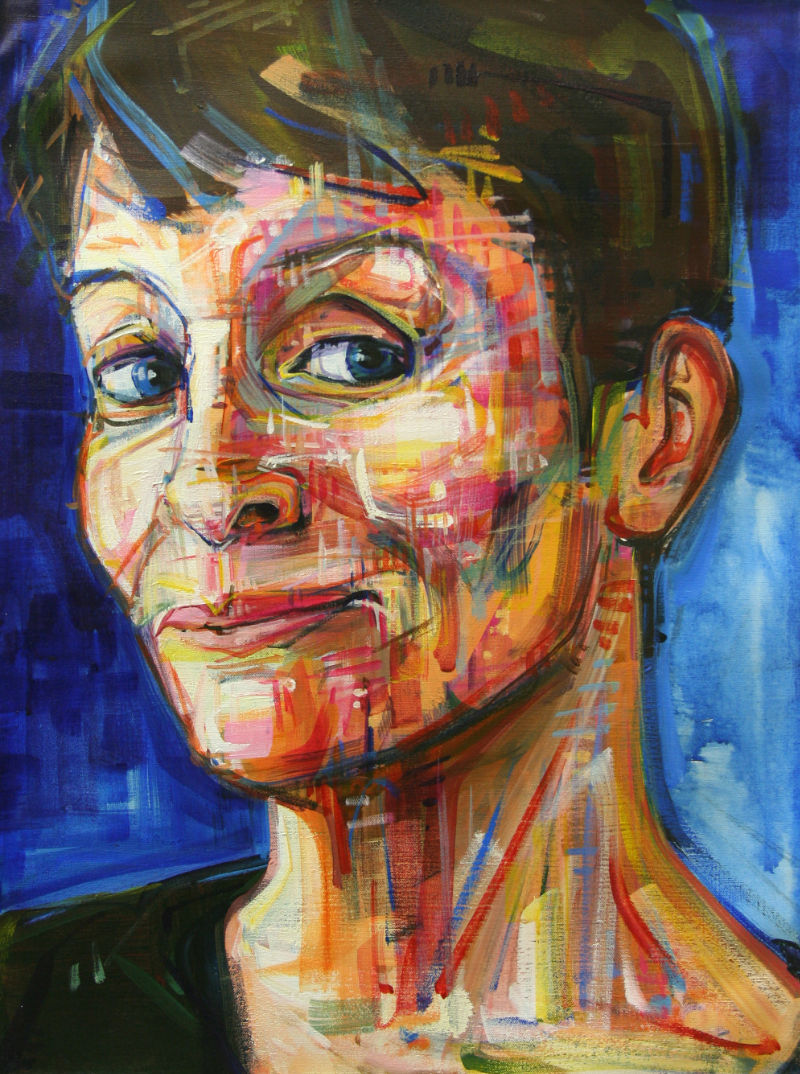
Reed Coleman
2004
acrylic on canvas
24 x 18 inches

Winsor & Newton flat brush. In 2004, I discovered this three centimeter wide flat brush, and I began to use it a bit like the house painting brush. It helped me tame my obsessive crosshatching here and there, and it did so in a more controlled manner than the hardware store brush had done.

Guillaume
2005
acrylic on canvas
26 x 20 inches
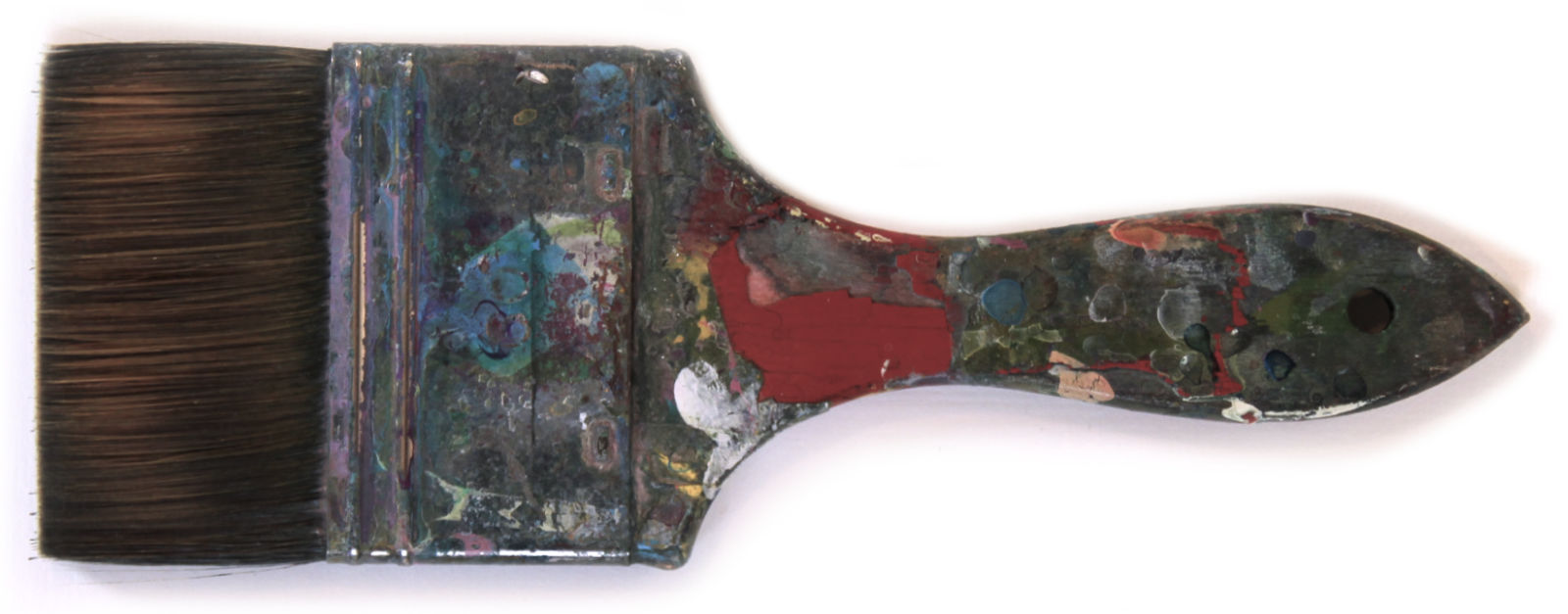
Da Vinci Cosmotop Spin Flat Wash Series 5080. This is the brush that changed everything for me. I had been coveting it for a while, but, in 2004, I was the textbook example of a starving artist and I couldn’t see spending $30 on a single brush.
When I did finally purchase it, its six centimeters of fine quality brush-ness gave my style an immediate facelift. In the 2005 portrait shown above, the single-brushstroke blocks of color are very obvious. This is something that I toned down as I became used to the Da Vinci Flat Wash brushes, but, when I was first getting acquainted with these tools, I relished the blatant blockiness.

Richard Speer
2006
acrylic on canvas
34 x 28 inches
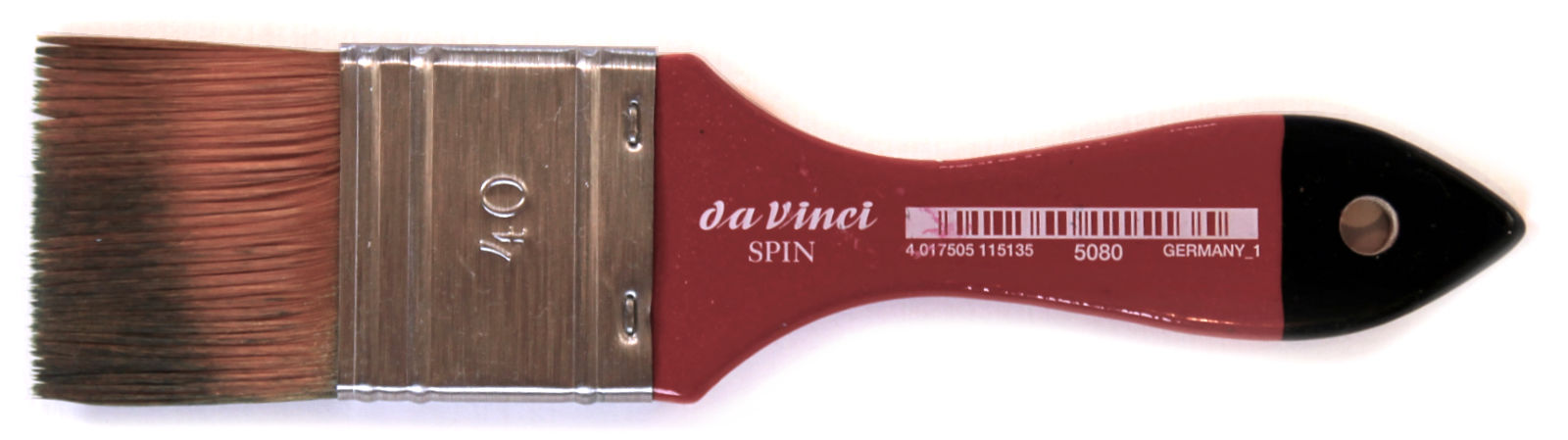
Da Vinci Cosmotop Spin Flat Wash Series 5080. A year later, I had incorporated the four centimeter wide version of the Da Vinci brush into my repertoire, and I was learning how to better use these brushes. They were no longer oversimplifying my paintings: they were adding to them.
This 2006 portrait of Richard is very different from the more monotonous paintings from 2001 and 2003. The wider array of brushes was making for a broader language of brushstrokes and a lot more dynamism in the finished work.

Margo
2007
acrylic on canvas
24 x 24 inches
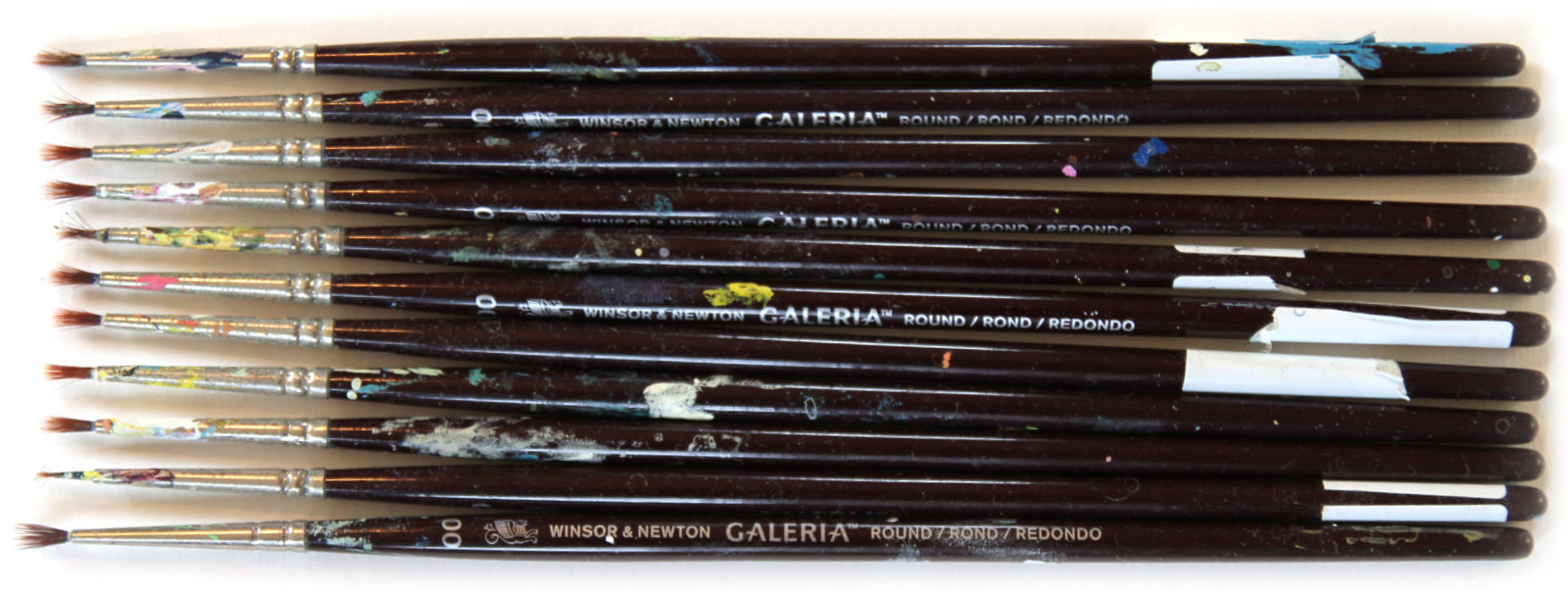
Winsor & Newton round brushes. Though the Da Vinci Flat Wash brushes remade me as a painter, I’ve always remained loyal to my roots. As Margo’s 2007 portrait clearly shows, Winsor & Newton’s 0 and 00 size brushes are still an important part of finishing my paintings.

Lily
2008
acrylic on canvas
25 x 20 inches
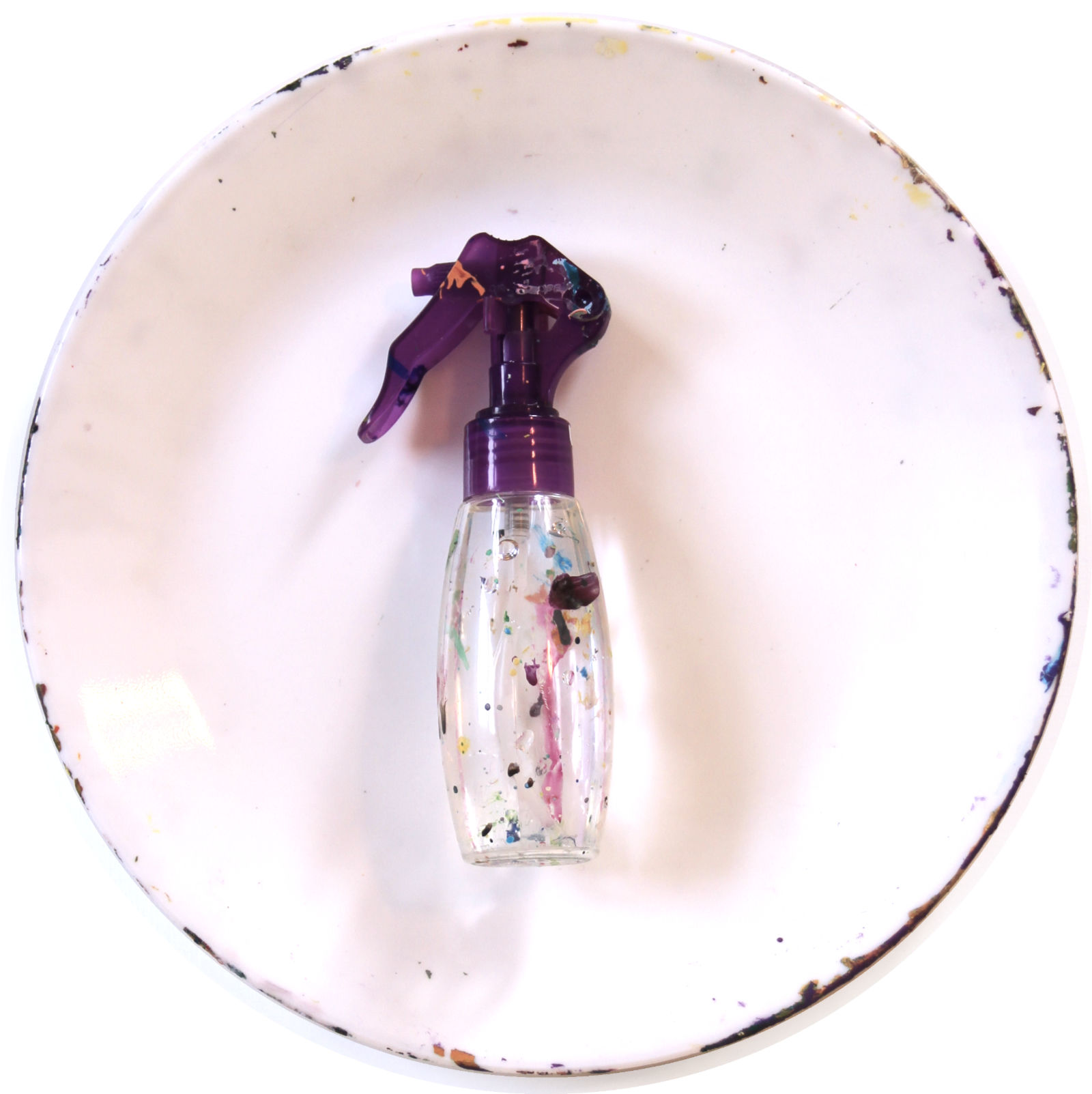
In 2008, it wasn’t a new brush that inspired me. Instead it was a conscious decision to experiment (along with an accident involving my right hand) that added another kind of mark to my paintings. This plate and spray bottle are what make the softness in Lily’s portrait possible.

Andrea and Paula
2009
acrylic on canvas
47 x 35 inches
This is one of my favorite portraits that I’ve ever made—check out the explanation of the making of this piece which includes photos of the subjects. While my love for the painting, Andrea and Paula, probably has a lot to do with how I feel about the people in the painting, it’s also a matter of seeing all my marks united in one painting. In that sense, it’s a record of how my tools have raised me up as a painter over the last ten years. Of course, the portrait of Andrea and Paula is not the last painting that I’ve made, and my style continues to evolve right along with my tool box.
Maybe this post made you think of something you want to share with me? Or perhaps you have a question about my art? I’d love to hear from you!
To receive an email every time I publish a new article or video, sign up for my special mailing list.
If you enjoyed this post, Ko-fi allows you to donate. Every dollar you give is worth a bajillion to me!