Blog / 2009 / Working the Whole Composition
November 16, 2009
One of the the most important lessons I’ve ever learned about painting came from Alexandra Hirsch, an instructor at the Pacific Northwest College of Art. I was barely 16 and studying acrylics formally for the first time.
I was working on a self-portrait and having trouble with the background, an abstract color field. Alex approached my easel and recommended I take some of the color I had mixed for my cheek or my eye and put a dab of it elsewhere in the composition as a way of tying the whole together.
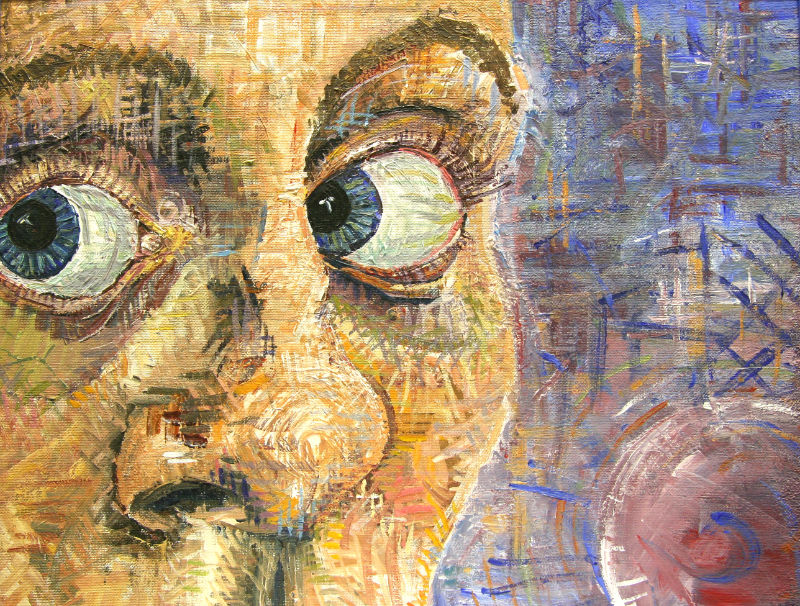
Self-portrait
1997
acrylic on canvas board
14 x 18 inches
This is that painting, and, in the ten or so years since, I’ve figured out just what Alex meant. I still paint by her words, making a point to work the whole composition every time I put brush to canvas or panel.
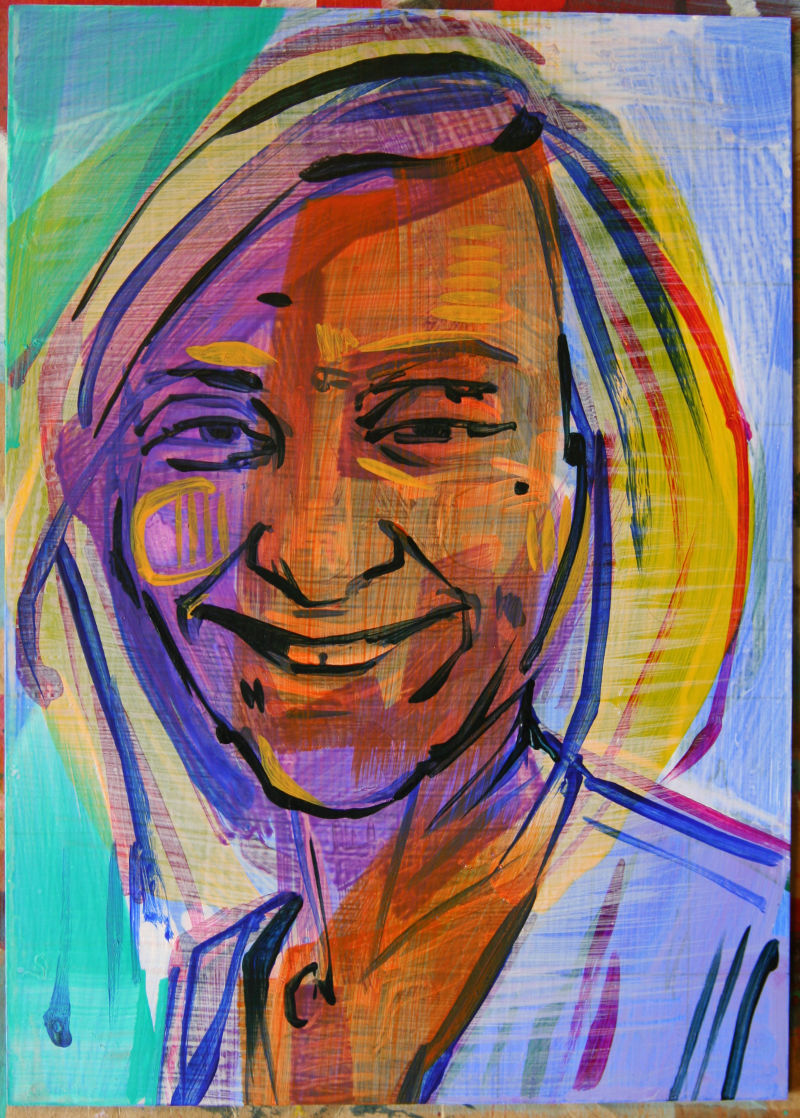
This method comes naturally when working on small art, like this piece, which measures just 7 by 5 inches.
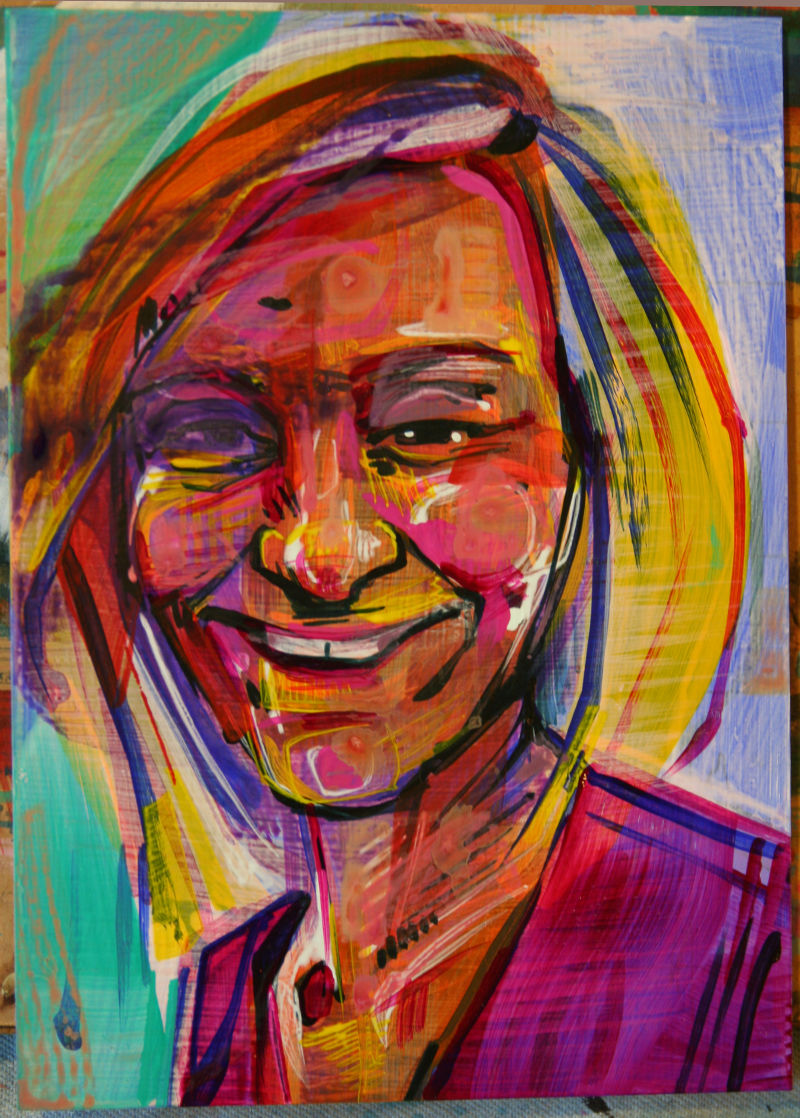
In a few brushstrokes, the entire composition is changed drastically.
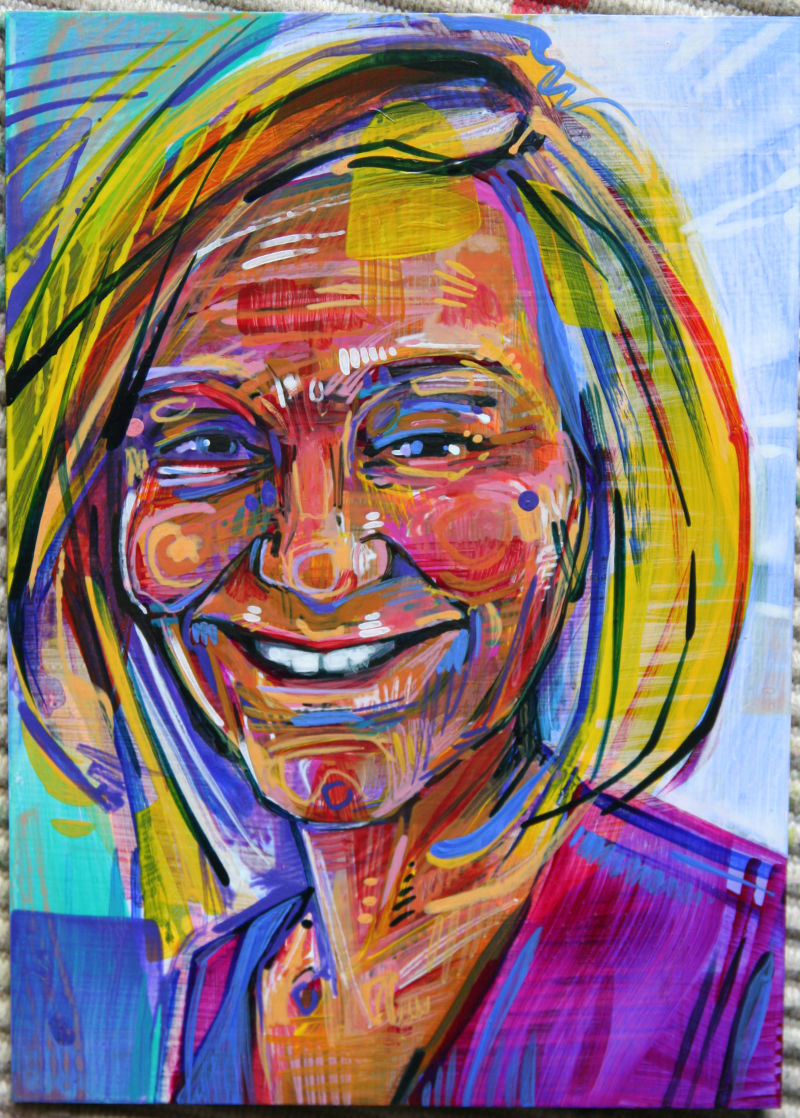
It’s exciting and sometimes unnerving how quickly the painting evolves when there’s only a small surface to work...
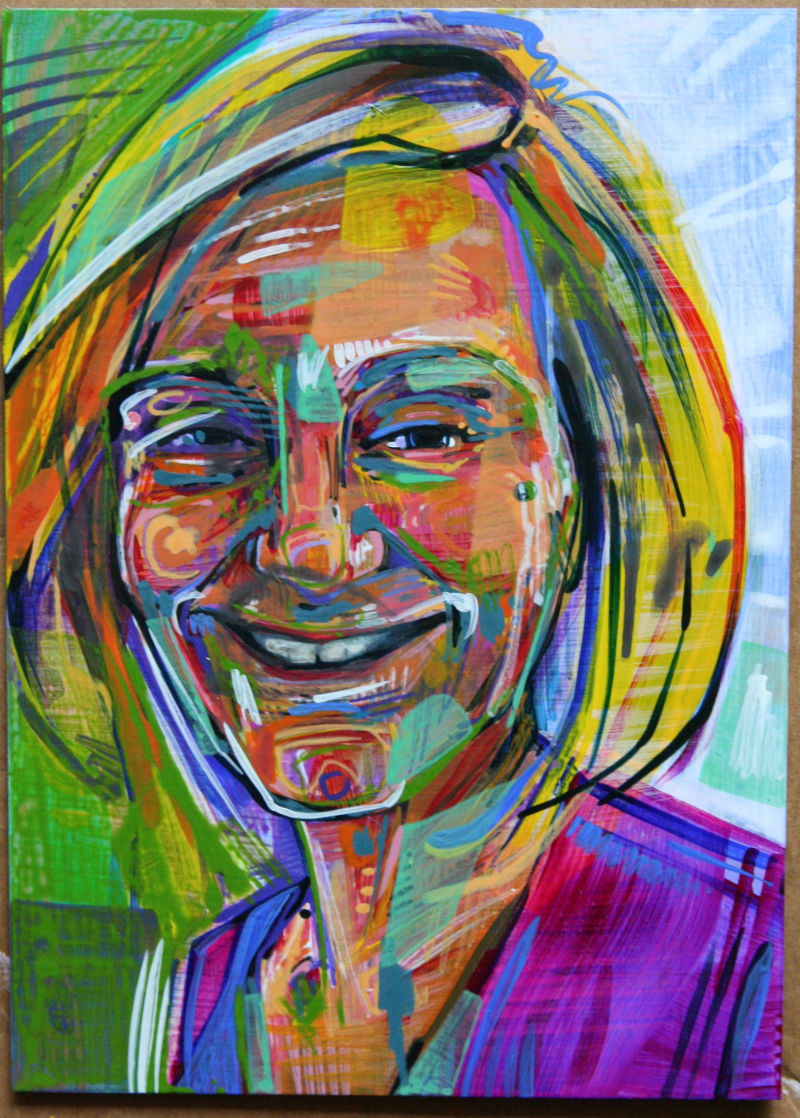
...but it’s also a good reminder of why working the whole composition is essential even with bigger paintings.
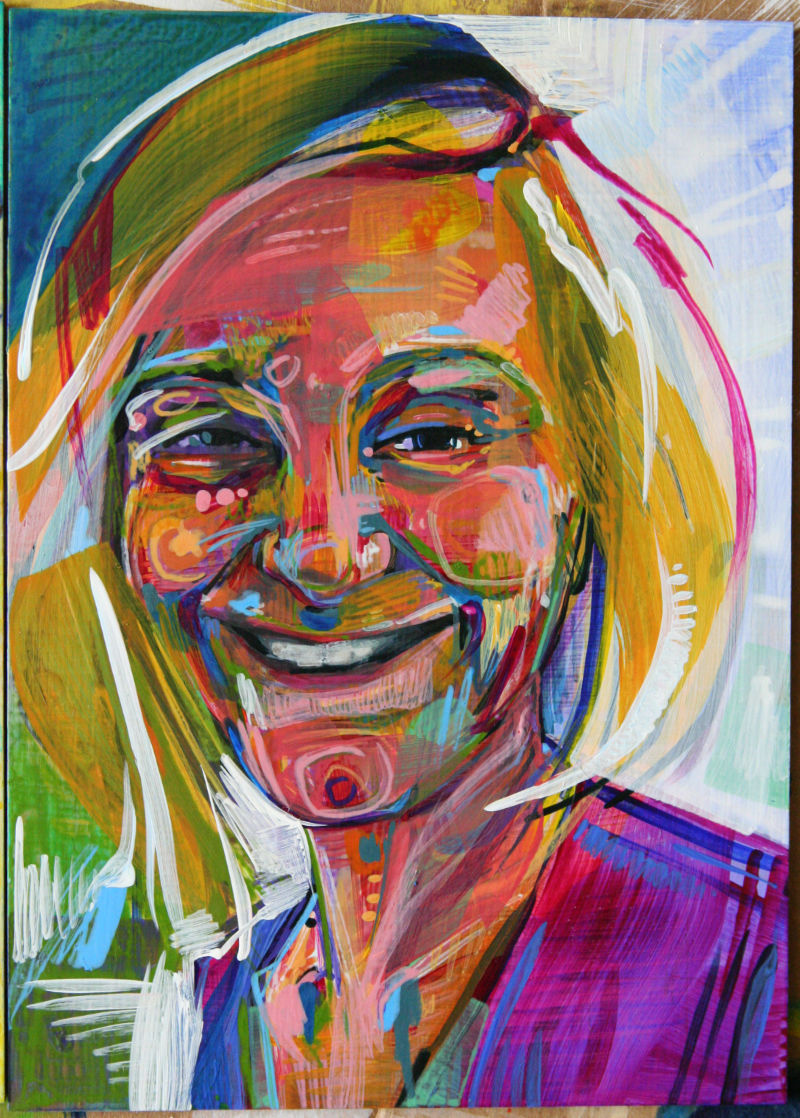
Focusing on just one area of the painting at a time isolates it from the rest of the dynamic. It makes for a very disjointed or even mannered look.
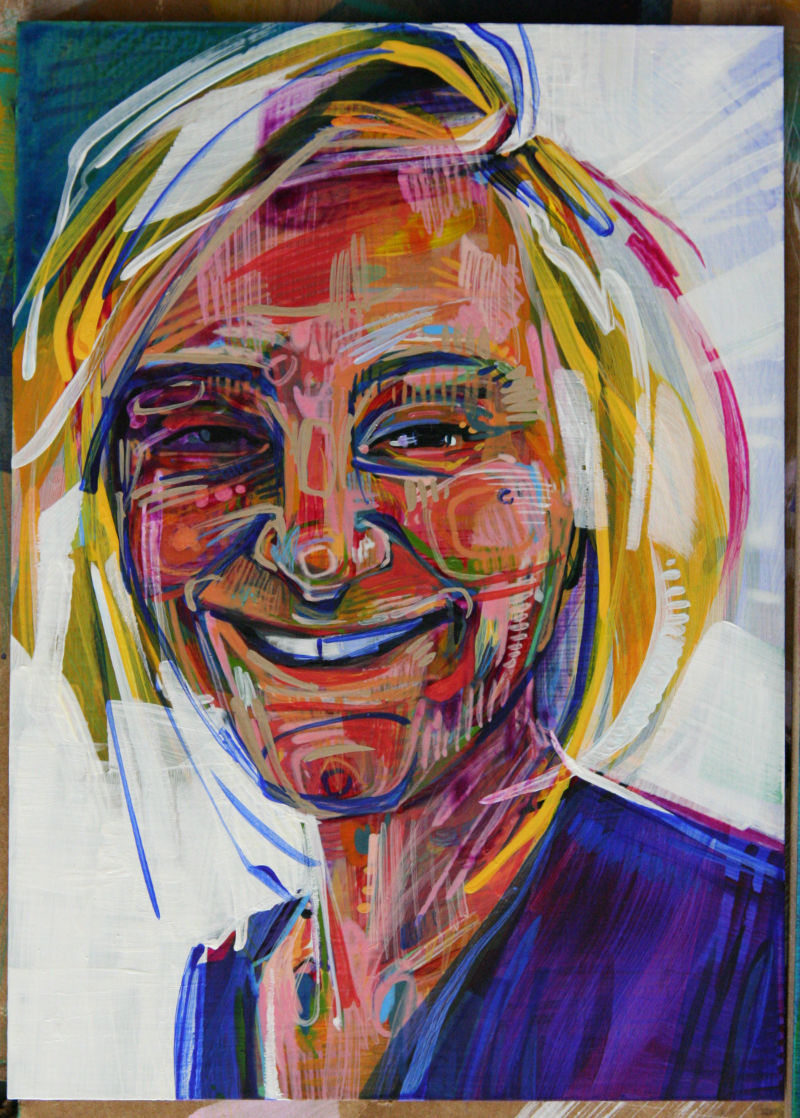
Reworking the whole piece every time I touch it is sometimes scary, especially when I’m convinced that I’m on the right track like I was here.
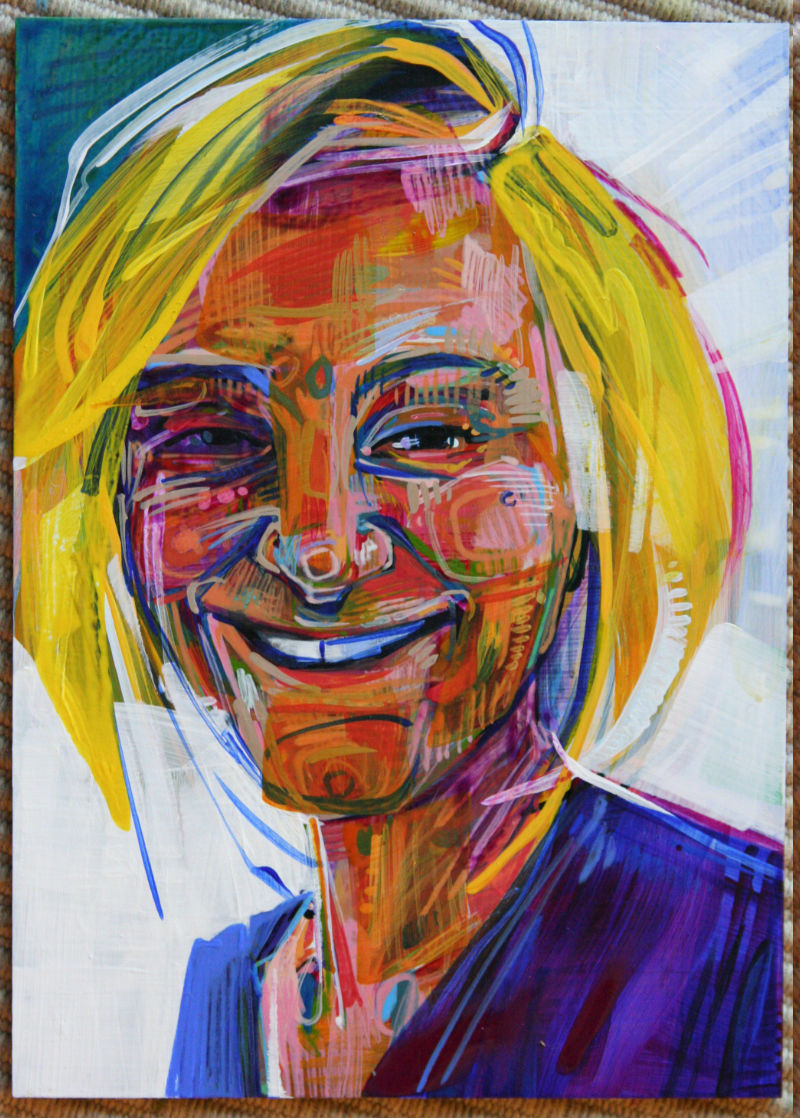
But, by the time I got here...
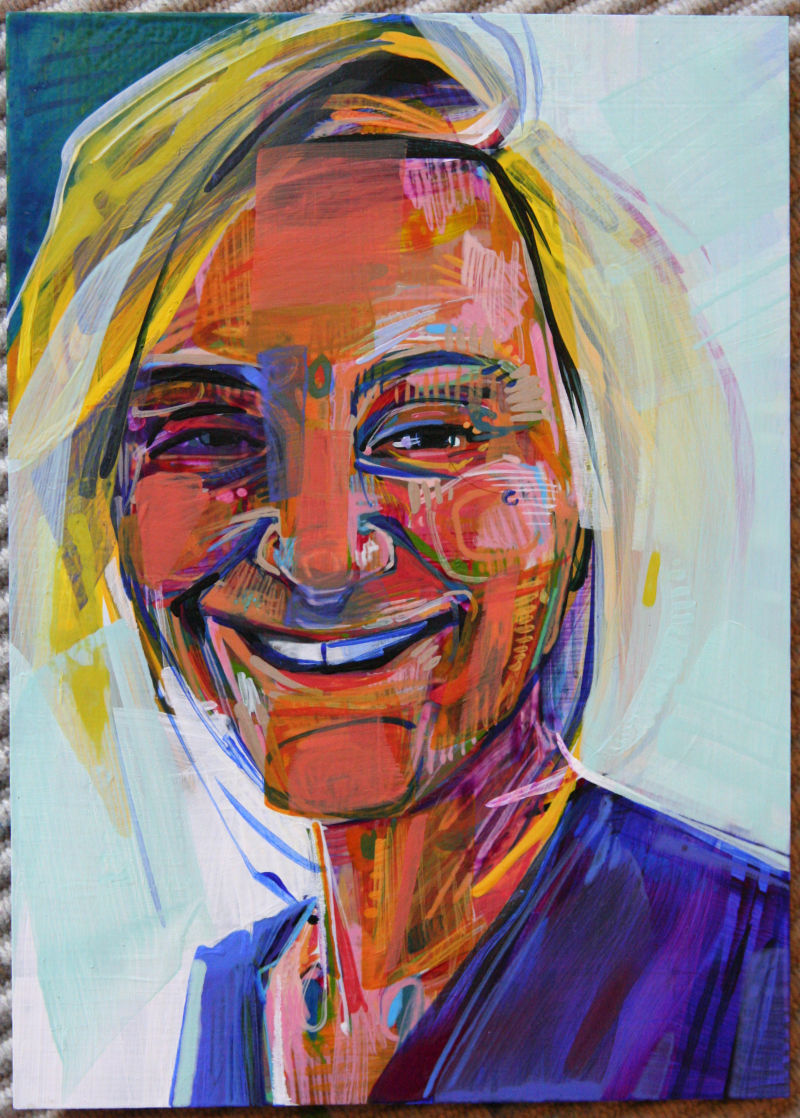
...and even here...
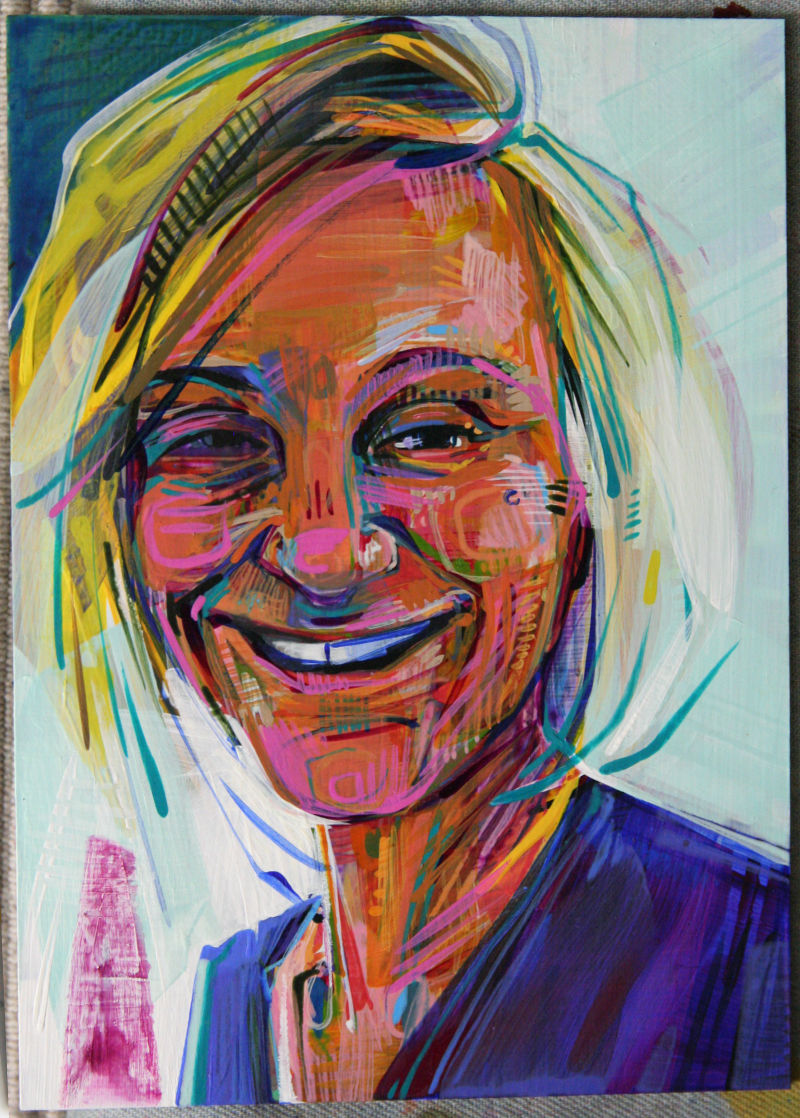
...I was aware that certain aspects of the painting a few process shots back would never have worked out.
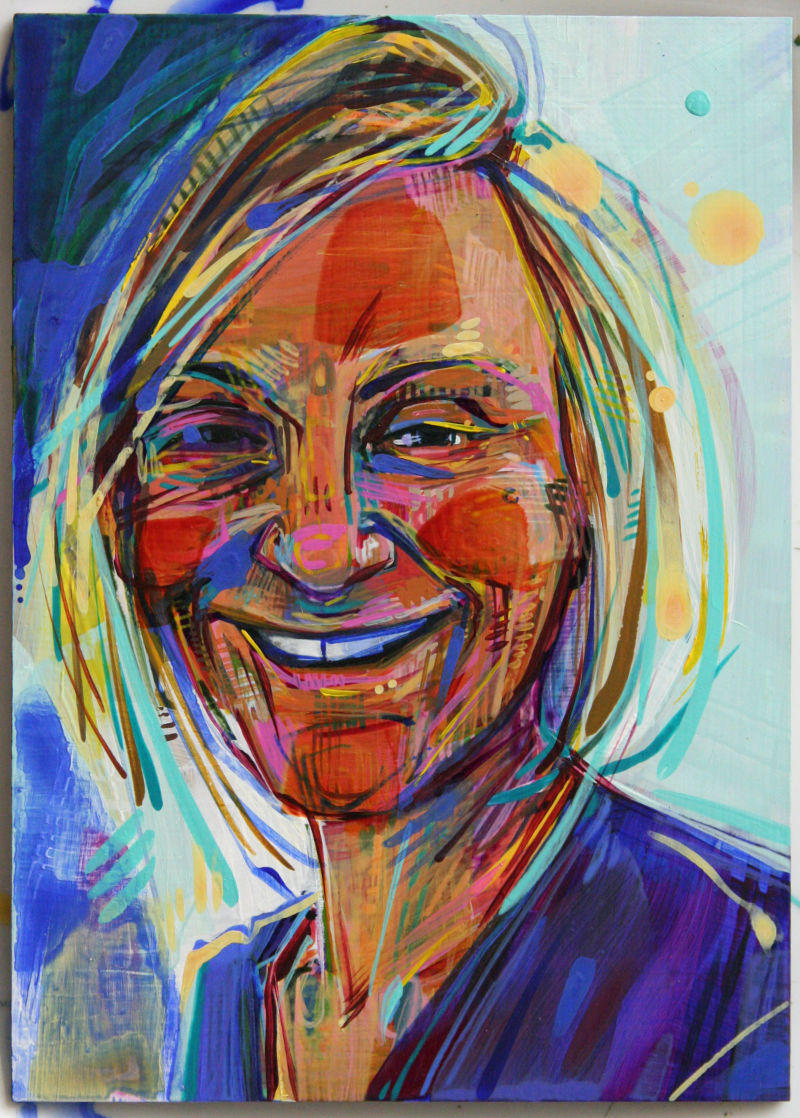
Working this way is a discipline of not-getting-too-attached.
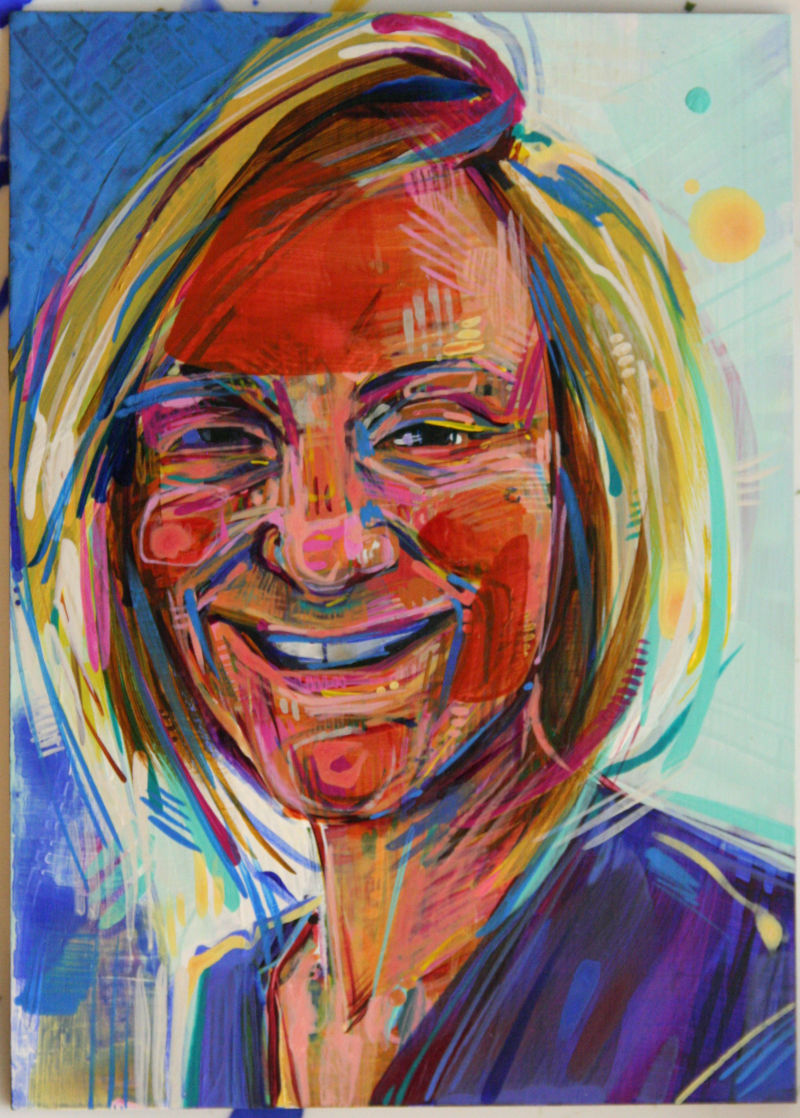
It’s akin to the ceramicist who, to some degree, must kiss their pot goodbye when it goes into the kiln.
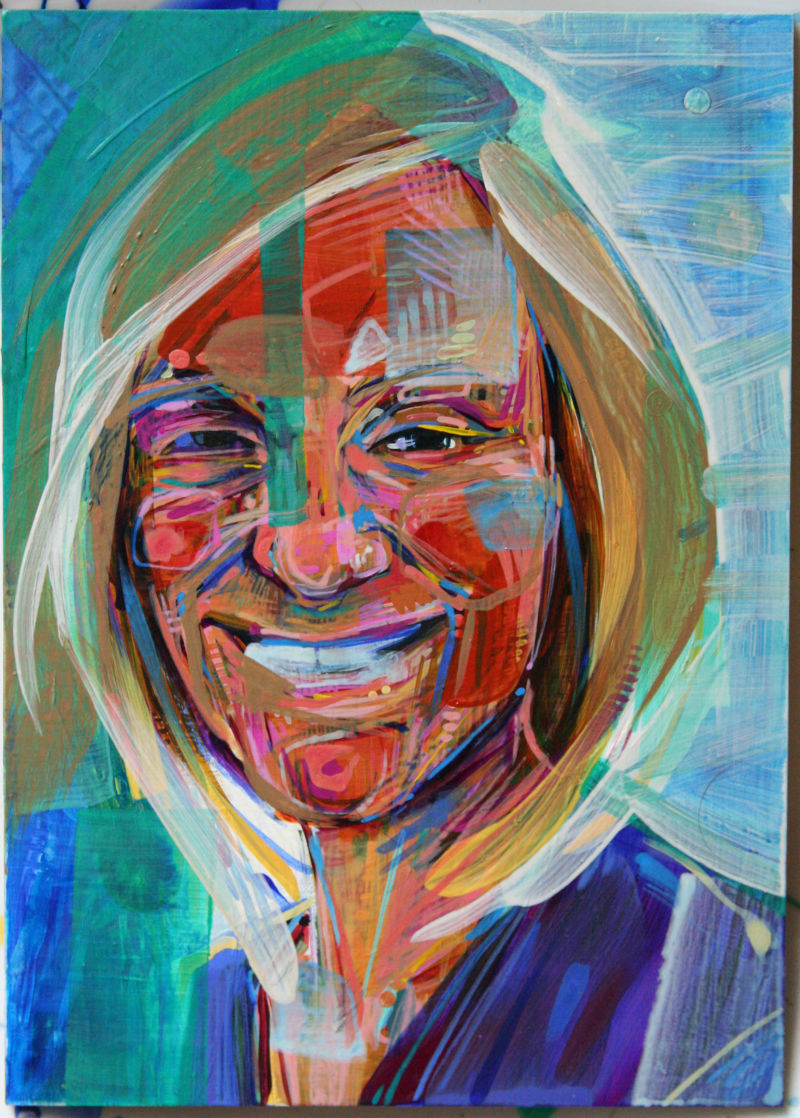
There’s always the possibility of a complete overhaul...
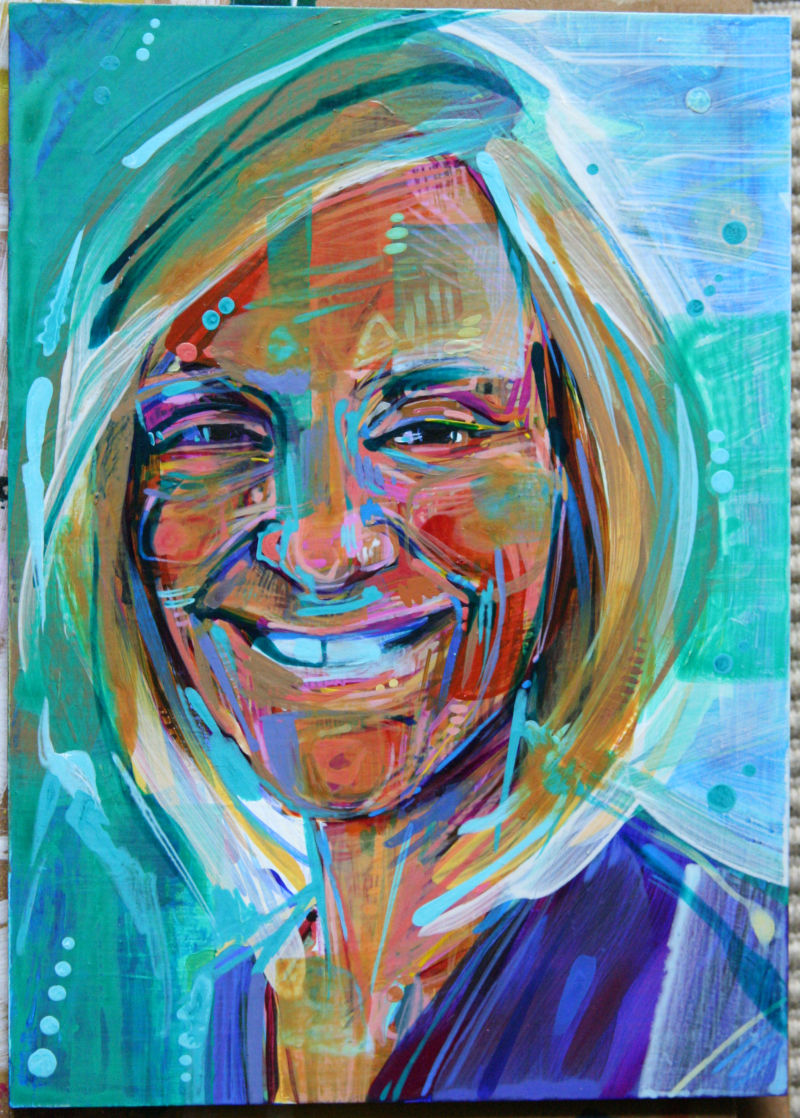
...or even a complete do-over!
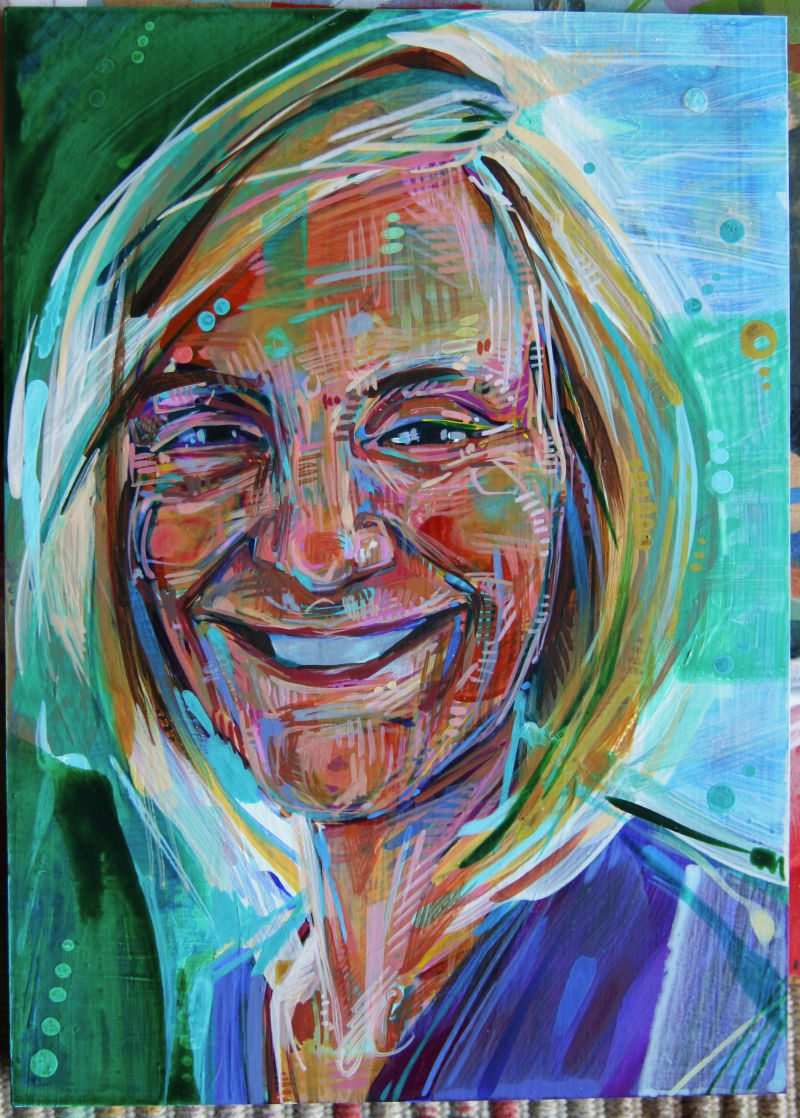
Nothing is finished...
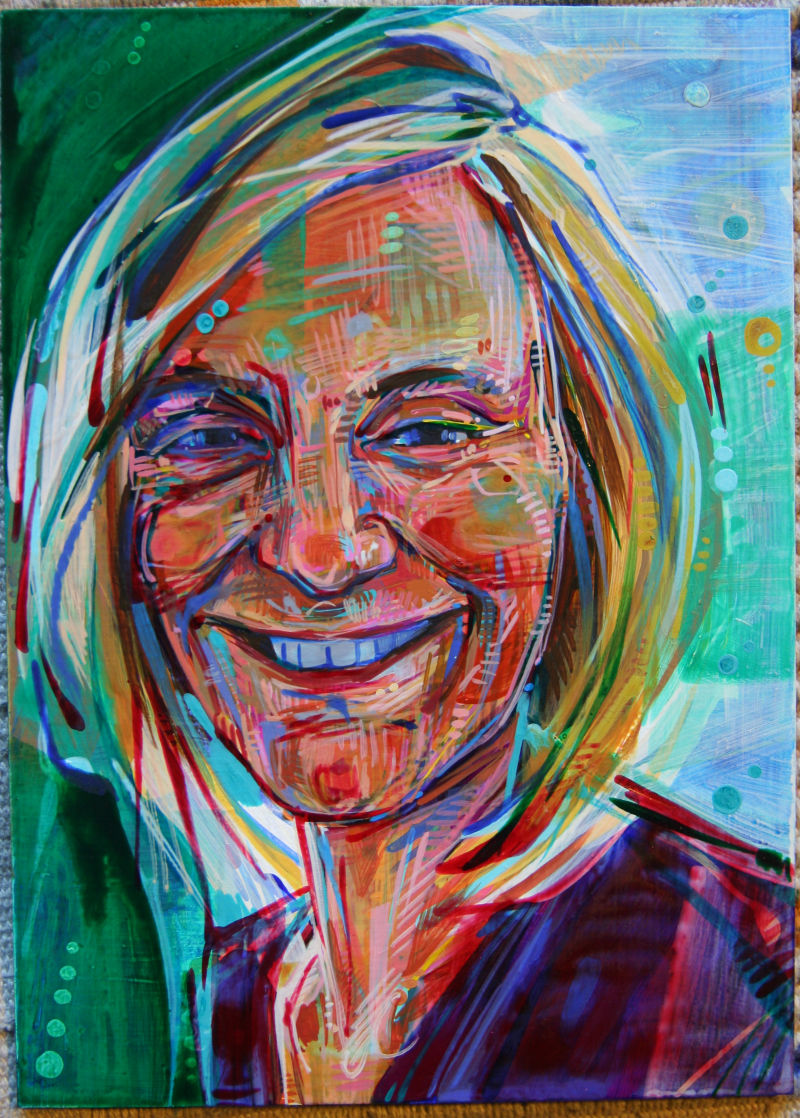
...until...
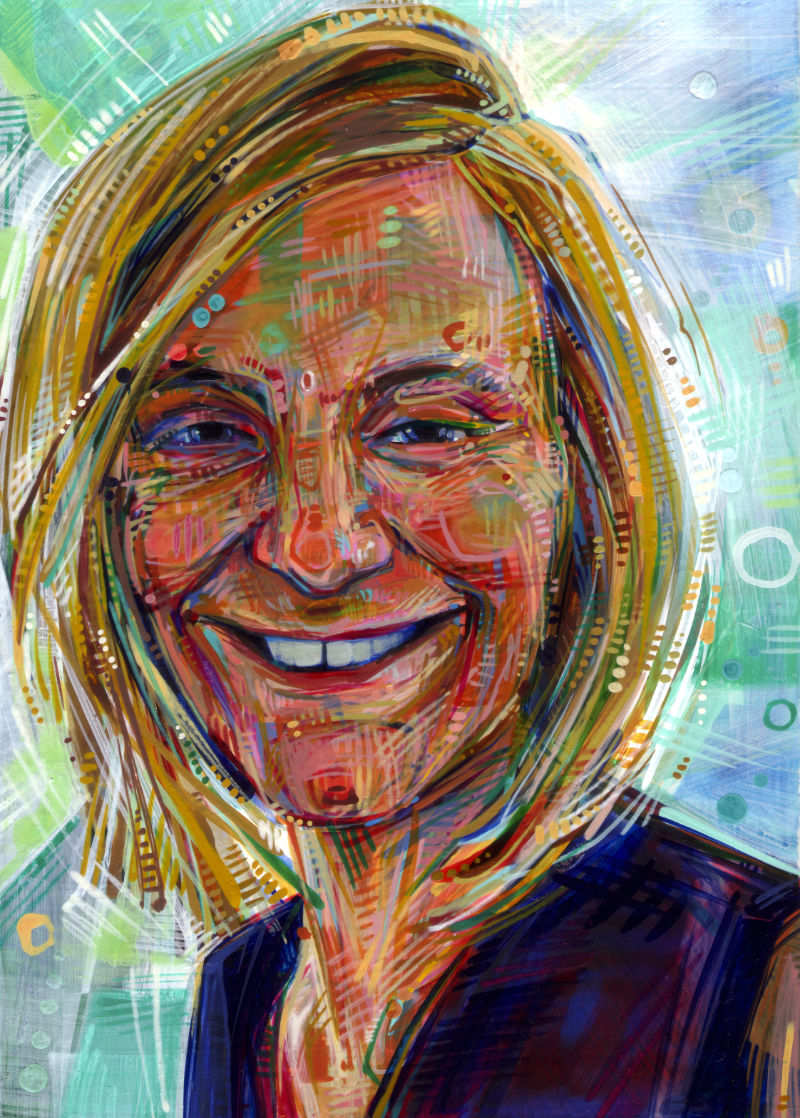
Gap
2009
acrylic on panel
7 x 5 inches
...it’s finished!
Maybe this post made you think of something you want to share with me? Or perhaps you have a question about my art? I’d love to hear from you!
To receive an email every time I publish a new article or video, sign up for my special mailing list.
If you enjoyed this post, Ko-fi allows you to donate. Every dollar you give is worth a bajillion to me!